
Menu
Menu
Menu
BOOK YOUR FREE STRATEGY CALL
BOOK YOUR FREE STRATEGY CALL
Healthcare Portal UX & Frontend Revamp
Healthcare Portal UX & Frontend Revamp
Healthcare Portal UX & Frontend Revamp
A user-centered redesign that simplified complex healthcare workflows, reduced support tickets, and improved patient experience.
A user-centered redesign that simplified complex healthcare workflows, reduced support tickets, and improved patient experience.
A user-centered redesign that simplified complex healthcare workflows, reduced support tickets, and improved patient experience.

About the Project
About the Project
About the Project
Radence's Patient and Doctor Portal Transformed into an Intuitive, High-Performance Healthcare Platform
Radence's Patient and Doctor Portal Transformed into an Intuitive, High-Performance Healthcare Platform
Radence's Patient and Doctor Portal Transformed into an Intuitive, High-Performance Healthcare Platform
Radence partnered with Hashbyt to modernize a legacy healthcare portal by upgrading its frontend architecture, improving UX clarity, and delivering a scalable, high-performance web experience.
Radence partnered with Hashbyt to modernize a legacy healthcare portal by upgrading its frontend architecture, improving UX clarity, and delivering a scalable, high-performance web experience.
Challenge
Challenge
The primary challenge was not visual design alone. Radence needed a frontend that could support complex healthcare workflows while remaining intuitive and user-friendly for both patients and doctors.
The primary challenge was not visual design alone. Radence needed a frontend that could support complex healthcare workflows while remaining intuitive and user-friendly for both patients and doctors.
Legacy frontend limits scale
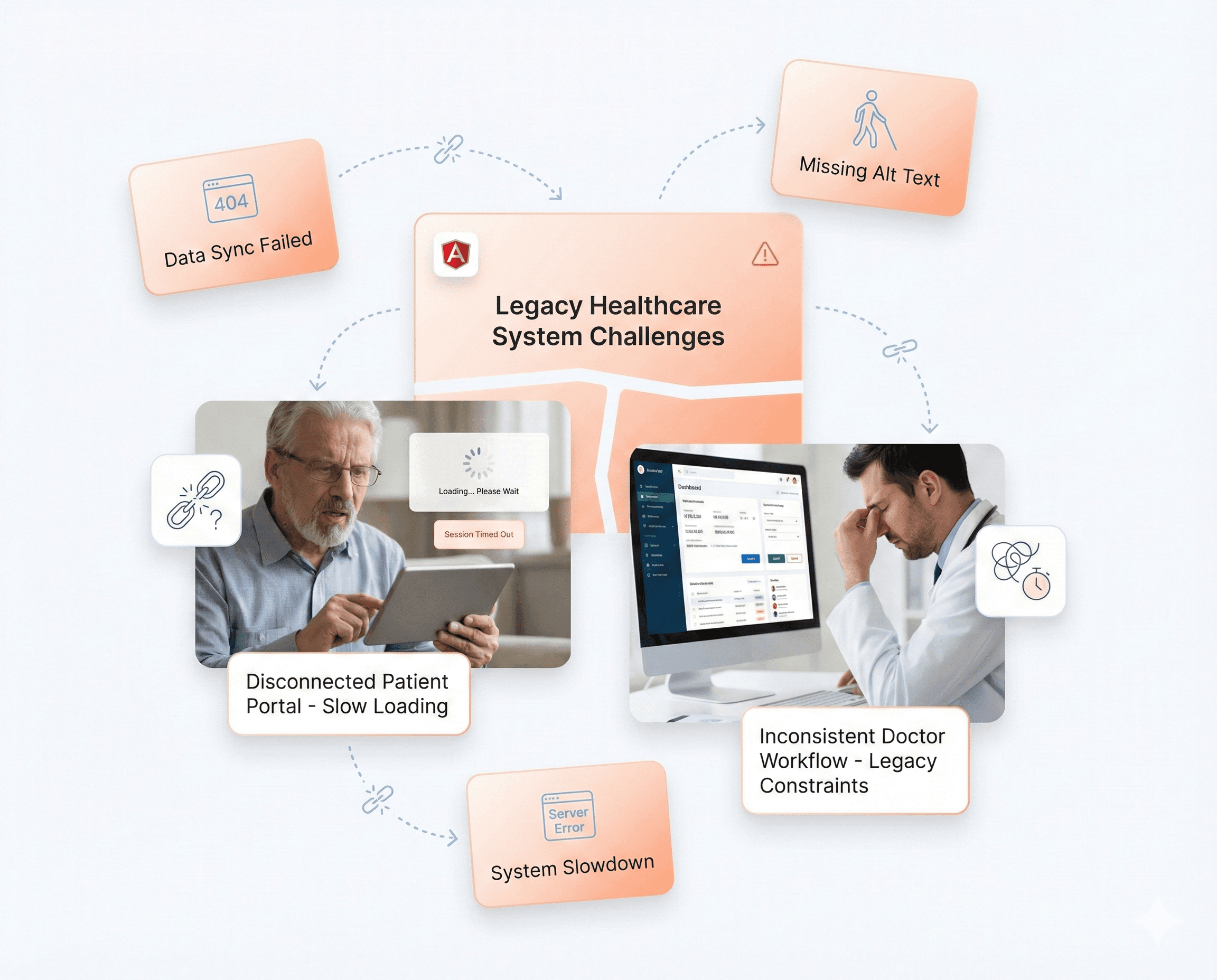
The portal was running on an older Angular.js-based architecture that made frontend changes difficult and risky. UI workflows were tightly coupled with screens, meaning even small updates could introduce regressions. Modernization required a safe upgrade path that improved maintainability without disrupting critical portal journeys.
Legacy frontend limits scale
The portal was running on an older Angular.js-based architecture that made frontend changes difficult and risky. UI workflows were tightly coupled with screens, meaning even small updates could introduce regressions. Modernization required a safe upgrade path that improved maintainability without disrupting critical portal journeys.
Async and state inconsistency
Legacy modules had different patterns for API calls, UI loading states, and error handling. This caused unpredictable behavior and inconsistent user experiences across the portal. A stable reactive structure was required to standardize async workflows and keep frontend-data synchronization reliable.
Async and state inconsistency
Legacy modules had different patterns for API calls, UI loading states, and error handling. This caused unpredictable behavior and inconsistent user experiences across the portal. A stable reactive structure was required to standardize async workflows and keep frontend-data synchronization reliable.
UI inconsistency across modules
Over time, different screens evolved with different styling and interaction patterns, leading to visual drift and mismatched components. This increased cognitive load for users and reduced overall product trust. A consistent UI foundation was needed to unify components, spacing, and reusable patterns across the portal.
UI inconsistency across modules
Over time, different screens evolved with different styling and interaction patterns, leading to visual drift and mismatched components. This increased cognitive load for users and reduced overall product trust. A consistent UI foundation was needed to unify components, spacing, and reusable patterns across the portal.
API workflow gaps
The existing API layer was not optimized for portal workflows, forcing the frontend to handle unnecessary transformations and workarounds. Data structures were inconsistent across modules, increasing complexity in UI logic. Backend improvements and new API introductions were needed to improve integration stability and reduce frontend overhead.
API workflow gaps
The existing API layer was not optimized for portal workflows, forcing the frontend to handle unnecessary transformations and workarounds. Data structures were inconsistent across modules, increasing complexity in UI logic. Backend improvements and new API introductions were needed to improve integration stability and reduce frontend overhead.
Slow and heavy UI
Healthcare portals require quick access to information, but the legacy UI had performance bottlenecks during page loads and complex interactions. Rendering felt heavy, especially across data-rich screens and forms. The experience needed performance optimization to ensure smooth navigation across devices, especially mobile.
Slow and heavy UI
Healthcare portals require quick access to information, but the legacy UI had performance bottlenecks during page loads and complex interactions. Rendering felt heavy, especially across data-rich screens and forms. The experience needed performance optimization to ensure smooth navigation across devices, especially mobile.
Challenge
The primary challenge was not visual design alone. Radence needed a frontend that could support complex healthcare workflows while remaining intuitive and user-friendly for both patients and doctors.
Legacy frontend limits scale
The portal was running on an older Angular.js-based architecture that made frontend changes difficult and risky. UI workflows were tightly coupled with screens, meaning even small updates could introduce regressions. Modernization required a safe upgrade path that improved maintainability without disrupting critical portal journeys.
Async and state inconsistency
Legacy modules had different patterns for API calls, UI loading states, and error handling. This caused unpredictable behavior and inconsistent user experiences across the portal. A stable reactive structure was required to standardize async workflows and keep frontend-data synchronization reliable.
UI inconsistency across modules
Over time, different screens evolved with different styling and interaction patterns, leading to visual drift and mismatched components. This increased cognitive load for users and reduced overall product trust. A consistent UI foundation was needed to unify components, spacing, and reusable patterns across the portal.
API workflow gaps
The existing API layer was not optimized for portal workflows, forcing the frontend to handle unnecessary transformations and workarounds. Data structures were inconsistent across modules, increasing complexity in UI logic. Backend improvements and new API introductions were needed to improve integration stability and reduce frontend overhead.
Slow and heavy UI
Healthcare portals require quick access to information, but the legacy UI had performance bottlenecks during page loads and complex interactions. Rendering felt heavy, especially across data-rich screens and forms. The experience needed performance optimization to ensure smooth navigation across devices, especially mobile.
Our Technology Stack
Our Technology Stack
Built on a Foundation of Modern Tech
From Figma prototypes to Cypress testing, our stack ensures speed and quality.

Frontend

Angular
React
Vue.js
Next.js
Vite
Webpack
Micro-Frontends

UI Libraries
Material UI
Tailwind
Bootstrap
Shadcn

Design Tool
Figma
Framer
Sketch
Adobe Creative Suite

Testing & QA Tools
Jest
React Testing Library
Cypress

State Management
Redux Toolkit
Zustand
TanStack Query
NGRX

Design Systems
Storybook
Design Tokens
CSS Variables
Monorepos

Performance
Lighthouse
Web Vitals
Sentry
LogRocket
New Relic

Compliance
WCAG 2.1 AA
ARIA
axe DevTools
Accessibility Audits

CI/CD & DevOps
GitHub Actions
Vercel
Netlify
Docker

Enterprise Security
OWASP
RBAC / Permission UI
Audit Logs UI
HIPAA / GDPR
Frontend
Angular
React
Vue.js
Next.js
Vite
Webpack
Micro-Frontends
UI Libraries
Material UI
Tailwind
Bootstrap
Shadcn
Design Tool
Figma
Framer
Sketch
Adobe Creative Suite
Testing & QA Tools
Jest
React Testing Library
Cypress
State Management
Redux Toolkit
Zustand
TanStack Query
NGRX
Design Systems
Storybook
Design Tokens
CSS Variables
Monorepos
Performance
Lighthouse
Web Vitals
Sentry
LogRocket
New Relic
Compliance
WCAG 2.1 AA
ARIA
axe DevTools
Accessibility Audits
CI/CD & DevOps
GitHub Actions
Vercel
Netlify
Docker
Enterprise Security
OWASP
RBAC / Permission UI
Audit Logs UI
HIPAA / GDPR
Solution
Solution
Solution
Hashbyt led a full UX/UI overhaul with a compliance-first approach. Instead of treating accessibility and regulatory needs as constraints, they were built directly into the design system and frontend architecture.
Hashbyt led a full UX/UI overhaul with a compliance-first approach. Instead of treating accessibility and regulatory needs as constraints, they were built directly into the design system and frontend architecture.
Hashbyt led a full UX/UI overhaul with a compliance-first approach. Instead of treating accessibility and regulatory needs as constraints, they were built directly into the design system and frontend architecture.
Angular upgrade
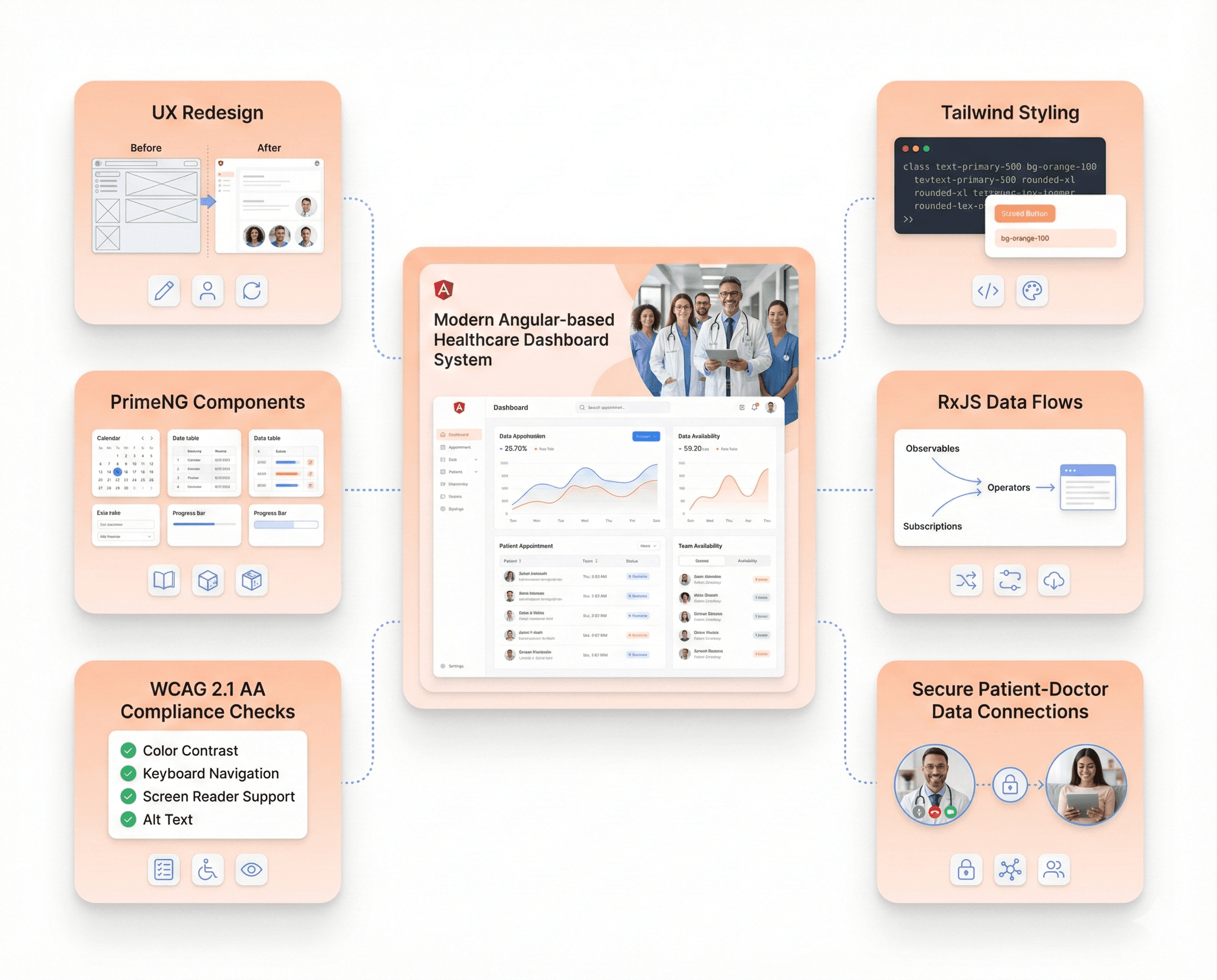
The frontend was modernized by upgrading from Angular.js to the latest Angular version. This improved long-term scalability, maintainability, and upgrade readiness for future enhancements. The new foundation supported cleaner component architecture and a more modern development workflow.
Angular upgrade
The frontend was modernized by upgrading from Angular.js to the latest Angular version. This improved long-term scalability, maintainability, and upgrade readiness for future enhancements. The new foundation supported cleaner component architecture and a more modern development workflow.
Angular upgrade
The frontend was modernized by upgrading from Angular.js to the latest Angular version. This improved long-term scalability, maintainability, and upgrade readiness for future enhancements. The new foundation supported cleaner component architecture and a more modern development workflow.
RxJS reactive flows
RxJS was used to standardize reactive patterns across the portal for async data handling and UI state updates. Loading states, error handling, and event-driven UI behavior became more predictable across modules. This improved reliability in complex portal workflows where multiple API calls happen in sequence.
RxJS reactive flows
RxJS was used to standardize reactive patterns across the portal for async data handling and UI state updates. Loading states, error handling, and event-driven UI behavior became more predictable across modules. This improved reliability in complex portal workflows where multiple API calls happen in sequence.
RxJS reactive flows
RxJS was used to standardize reactive patterns across the portal for async data handling and UI state updates. Loading states, error handling, and event-driven UI behavior became more predictable across modules. This improved reliability in complex portal workflows where multiple API calls happen in sequence.
PrimeNG components
PrimeNG was introduced as the UI component foundation to bring consistent patterns and reusable components across the product. This helped standardize inputs, tables, modals, and navigation behavior. The result was a cleaner, more uniform UI that improved usability and reduced inconsistency across modules.
PrimeNG components
PrimeNG was introduced as the UI component foundation to bring consistent patterns and reusable components across the product. This helped standardize inputs, tables, modals, and navigation behavior. The result was a cleaner, more uniform UI that improved usability and reduced inconsistency across modules.
PrimeNG components
PrimeNG was introduced as the UI component foundation to bring consistent patterns and reusable components across the product. This helped standardize inputs, tables, modals, and navigation behavior. The result was a cleaner, more uniform UI that improved usability and reduced inconsistency across modules.
Tailwind styling
Tailwind CSS was applied to improve layout consistency, spacing rhythm, and responsive behavior across the portal. Styling conflicts were reduced, and UI updates became faster to implement. This strengthened design consistency while supporting scalable UI iteration.
Tailwind styling
Tailwind CSS was applied to improve layout consistency, spacing rhythm, and responsive behavior across the portal. Styling conflicts were reduced, and UI updates became faster to implement. This strengthened design consistency while supporting scalable UI iteration.
Tailwind styling
Tailwind CSS was applied to improve layout consistency, spacing rhythm, and responsive behavior across the portal. Styling conflicts were reduced, and UI updates became faster to implement. This strengthened design consistency while supporting scalable UI iteration.
API improvements
Backend behavior was improved and new APIs were introduced to better match portal workflow needs. This reduced workaround-heavy frontend logic and improved the reliability of frontend-data synchronization. The portal became easier to extend and maintain through cleaner API structures and integration flows.
API improvements
Backend behavior was improved and new APIs were introduced to better match portal workflow needs. This reduced workaround-heavy frontend logic and improved the reliability of frontend-data synchronization. The portal became easier to extend and maintain through cleaner API structures and integration flows.
API improvements
Backend behavior was improved and new APIs were introduced to better match portal workflow needs. This reduced workaround-heavy frontend logic and improved the reliability of frontend-data synchronization. The portal became easier to extend and maintain through cleaner API structures and integration flows.
Why they chose Hashbyt
Why they chose Hashbyt
Why they chose Hashbyt
“What I found most impressive about Hashbyt was their deep understanding of user-centered design principles. They understood our workflows well and delivered a cleaner, more intuitive portal experience. Communication was smooth throughout, and the final product feels modern, consistent, and easier to use.”

Sarah Pesce
COO, Radence
“What I found most impressive about Hashbyt was their deep understanding of user-centered design principles. They understood our workflows well and delivered a cleaner, more intuitive portal experience. Communication was smooth throughout, and the final product feels modern, consistent, and easier to use.”
Sarah Pesce
COO, Radence
“What I found most impressive about Hashbyt was their deep understanding of user-centered design principles. They understood our workflows well and delivered a cleaner, more intuitive portal experience. Communication was smooth throughout, and the final product feels modern, consistent, and easier to use.”
Sarah Pesce
COO, Radence
Impact
Impact
Impact
Beyond metrics, the platform is now positioned to support future regulatory changes and feature expansion without requiring fundamental frontend rework.
Beyond metrics, the platform is now positioned to support future regulatory changes and feature expansion without requiring fundamental frontend rework.
Beyond metrics, the platform is now positioned to support future regulatory changes and feature expansion without requiring fundamental frontend rework.
Modern system upgrade
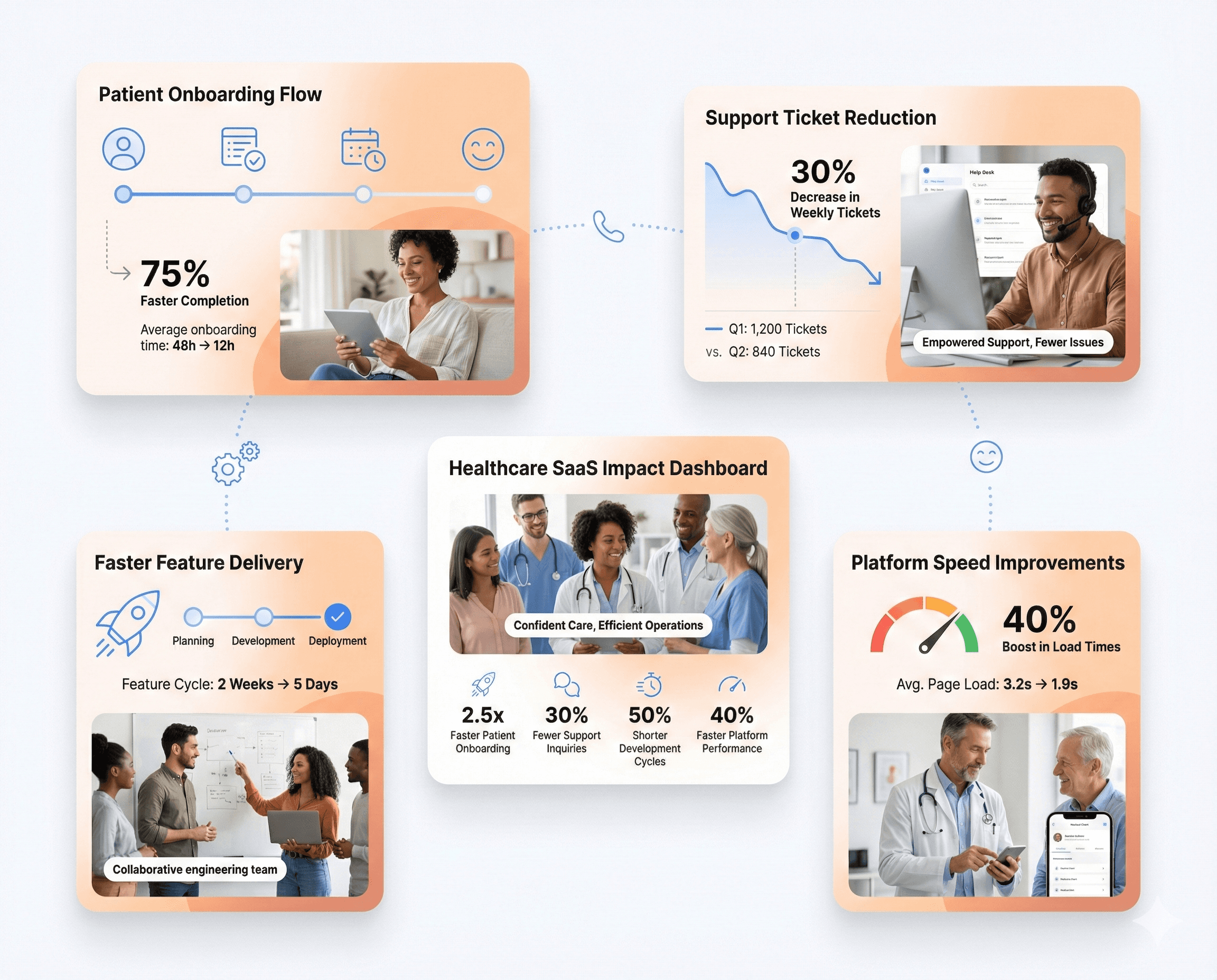
The portal successfully transitioned from a legacy UI setup into a modern Angular-based frontend system. This created a cleaner foundation for future development and continuous improvement. Teams can now build faster with fewer regression risks.
Modern system upgrade
The portal successfully transitioned from a legacy UI setup into a modern Angular-based frontend system. This created a cleaner foundation for future development and continuous improvement. Teams can now build faster with fewer regression risks.
Modern system upgrade
The portal successfully transitioned from a legacy UI setup into a modern Angular-based frontend system. This created a cleaner foundation for future development and continuous improvement. Teams can now build faster with fewer regression risks.
Improved healthcare UX flows
Patient and doctor journeys became clearer, more structured, and easier to complete. Navigation patterns improved, and key actions became easier to find. This reduced friction in real usage and strengthened portal usability.
Improved healthcare UX flows
Patient and doctor journeys became clearer, more structured, and easier to complete. Navigation patterns improved, and key actions became easier to find. This reduced friction in real usage and strengthened portal usability.
Improved healthcare UX flows
Patient and doctor journeys became clearer, more structured, and easier to complete. Navigation patterns improved, and key actions became easier to find. This reduced friction in real usage and strengthened portal usability.
Faster, smoother UI
Performance improvements reduced lag across navigation and interaction-heavy screens. Page loads became smoother, and UI behavior improved under real workflows. This created a faster and more responsive portal experience across devices.
Faster, smoother UI
Performance improvements reduced lag across navigation and interaction-heavy screens. Page loads became smoother, and UI behavior improved under real workflows. This created a faster and more responsive portal experience across devices.
Faster, smoother UI
Performance improvements reduced lag across navigation and interaction-heavy screens. Page loads became smoother, and UI behavior improved under real workflows. This created a faster and more responsive portal experience across devices.
Consistent UI at scale
PrimeNG + Tailwind helped unify UI patterns across modules with reusable components and predictable layouts. The portal experience became more cohesive and professional. This improved both user trust and long-term maintainability.
Consistent UI at scale
PrimeNG + Tailwind helped unify UI patterns across modules with reusable components and predictable layouts. The portal experience became more cohesive and professional. This improved both user trust and long-term maintainability.
Consistent UI at scale
PrimeNG + Tailwind helped unify UI patterns across modules with reusable components and predictable layouts. The portal experience became more cohesive and professional. This improved both user trust and long-term maintainability.
More reliable API integration
Backend and new API improvements reduced edge-case UI failures and improved data consistency. Integration flows became more stable across portal workflows. This increased production reliability and reduced operational friction.
More reliable API integration
Backend and new API improvements reduced edge-case UI failures and improved data consistency. Integration flows became more stable across portal workflows. This increased production reliability and reduced operational friction.
More reliable API integration
Backend and new API improvements reduced edge-case UI failures and improved data consistency. Integration flows became more stable across portal workflows. This increased production reliability and reduced operational friction.
Our services
Our services
Our services
SaaS Experience. Built on Data, Driven by AI.
SaaS Experience. Built on Data, Driven by AI.
SaaS Experience. Built on Data, Driven by AI.
We turn your vision into high-performance, user-loved SaaS products.
More Projects




Built on a Foundation of Modern Tech
From Figma prototypes to Cypress testing, our stack ensures speed and quality.
Our Technology Stack
Our Technology Stack
Frontend
Angular
React
Vue.js
Next.js
Vite
Webpack
Micro-Frontends
UI Libraries
Material UI
Tailwind
Bootstrap
Shadcn
Design Tool
Figma
Framer
Sketch
Adobe Creative Suite
Testing & QA Tools
Jest
React Testing Library
Cypress
State Management
Redux Toolkit
Zustand
TanStack Query
NGRX
Design Systems
Storybook
Design Tokens
CSS Variables
Monorepos
Performance
Lighthouse
Web Vitals
Sentry
LogRocket
New Relic
Compliance
WCAG 2.1 AA
ARIA
axe DevTools
Accessibility Audits
CI/CD & DevOps
GitHub Actions
Vercel
Netlify
Docker
Enterprise Security
OWASP
RBAC / Permission UI
Audit Logs UI
HIPAA / GDPR
Frontend
Angular
React
Vue.js
Next.js
Vite
Webpack
Micro-Frontends
UI Libraries
Material UI
Tailwind
Bootstrap
Shadcn
Design Tool
Figma
Framer
Sketch
Adobe Creative Suite
Testing & QA Tools
Jest
React Testing Library
Cypress
State Management
Redux Toolkit
Zustand
TanStack Query
NGRX
Design Systems
Storybook
Design Tokens
CSS Variables
Monorepos
Performance
Lighthouse
Web Vitals
Sentry
LogRocket
New Relic
Compliance
WCAG 2.1 AA
ARIA
axe DevTools
Accessibility Audits
CI/CD & DevOps
GitHub Actions
Vercel
Netlify
Docker
Enterprise Security
OWASP
RBAC / Permission UI
Audit Logs UI
HIPAA / GDPR